
A Peaceful Land of the Orcs (2.1)
---The following year, in Stellar Calendar 876.
Spring was on its way.
About 250 kilometers south-southwest in a straight line from the Belleriant Peninsula.
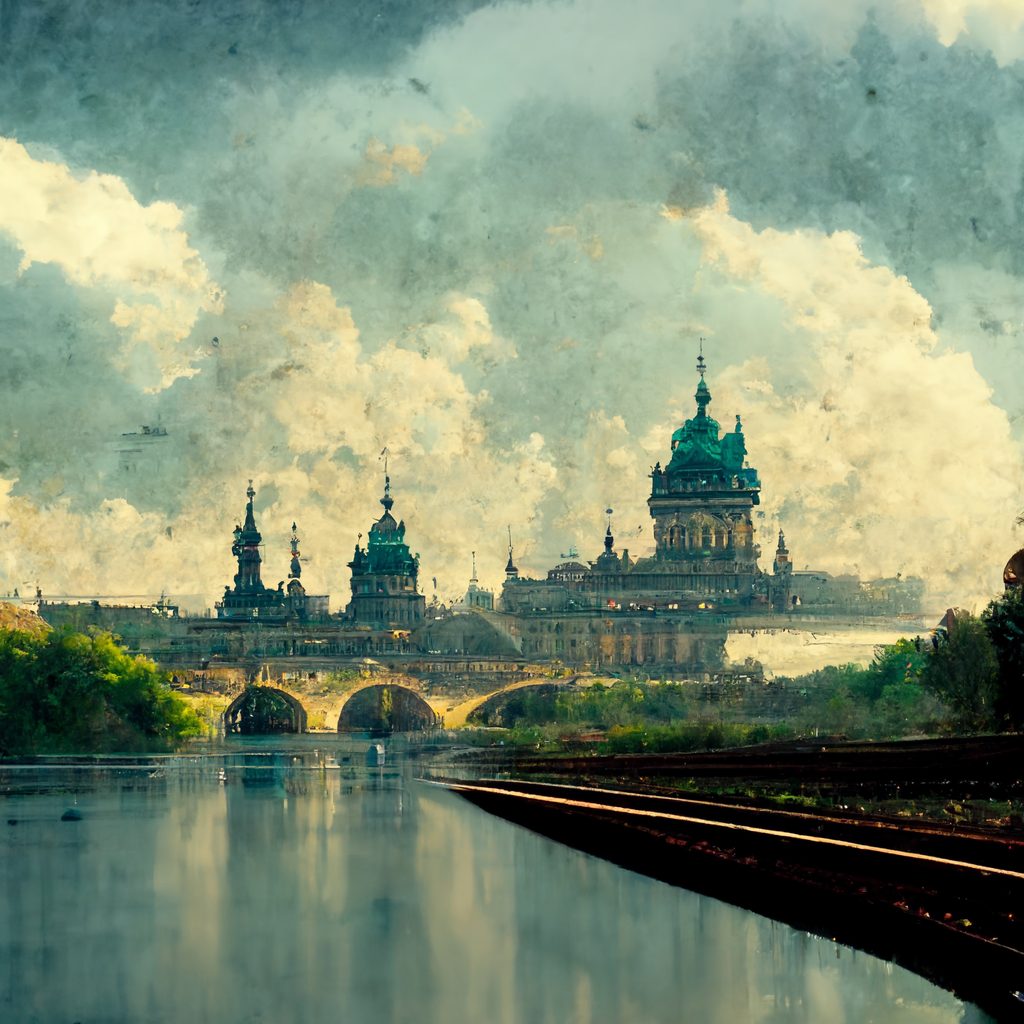
The capital of the Orcsen Kingdom, Wildschwein.
This city, meaning "wild boar" in Lowland Orcish, was where Dineluth Andariel resided.
In this celestial sphere, it was one of the cultural regions where many humanoid and Demon races gathered and thrived together. Located almost in the center of the western part of the Star Europe continent.
Forests, rivers, and lakes dotted the landscape, with gentle plains stretching out. It lay near the eastern edge of a vast, flat, lowland region that covered more than half the continent.
To the east lay several headwater valleys formed during the world's early days. A beautiful city embraced one of the rivers flowing from these valleys, spanning it north to south.
Rather than grandeur or luxury, the city exuded an air of strength and practicality.
The population of intelligent residents numbered about one million.
It was divided into three parts: the western old town, which had been the Orcs' center for centuries; the eastern new town, built over the past 50 years; and the suburban outskirts, which had been incorporated into the city due to recent population growth.
The suburbs contained vast farmlands and villages utilizing the plains. The old town showcased traditional architecture of wood, plaster, and stone from the pre-stellar era in its residential and artisan quarters. Meanwhile, the new town had government and commercial districts marked by large-scale iron-framed and marble structures adorned with sculptures.
In particular, the latter boasted rows of towering buildings.
Wide, well-maintained stone-paved roads distinguished for pedestrians and vehicles, waterways, and railways extending to various parts of Orcsen ensured excellent transportation both within the city and nationwide.
Streets were abundantly lined with evergreen trees, oaks in particular, which bore impressively large acorns in the autumn. Parks and fountains were plentiful.
Every corner of the city thrived under great prosperity.
 —Unbelievable...
Dineluth had thought this countless times.
Even among Human nations, such a grand capital was rare.
Even the capital of Elfynd, Tirion, which she once considered a city, felt like a rural town compared to Wildschwein.
That this was the domain of the Orcs, once deemed the "Dark Forest" by Elves and Humans alike, was astounding.
Great Wolves, Dwarves, Kobolds, and Great Eagles lived here.
Orcs made up 70% of the population, while other races accounted for the remaining 30%.
Yet, there was no conflict due to racial differences.
Exceptional governance, a fair tax system, equal education, a unified language, freedom of occupational choice for all citizens, and a clearly institutionalized conscription system made this possible.
Remarkably, there were even embassies from some Human nations.
Even a church of the Holy Star Faith, a religion deeply influential across the Star Europe continent, had a presence here. Although the Demon races did not get along well with this faith, this church served the Human residents and did not openly proselytize.
True to the Orc King's words, they even seemed to interact with them.
Moreover, cities like this, albeit smaller than the capital, existed across Orcsen, interconnected by highways, inland waterways, and railways.
Dark Elf survivors, for example, could travel from the northern regions to this capital without a single transfer and in a relatively short time, thanks to the specially arranged trains running daily.
—120 years since the Battle of the Rosalind Valley.
Was this truly the same Orc nation that, just 120 years ago, wreaked havoc on surrounding lands with unrestrained brutality?
Yet, no matter how unbelievable, both Dineluth and her people were beginning to benefit from this prosperity.
"You are my people."
The Orc King's words were no lie.
In the northwest outskirts of the new town, in the suburb of Walderberg, a newly designated district was granted to the Dark Elves by royal decree, where they were to live collectively.
This area had previously been a third military training ground of the Orcsen army and a royal agricultural experiment site. Surrounded by abundant forests, lakes, and pastures convertible to farmland, a small town was now being hastily constructed with bricks, plaster, wood, steel frames, and stone, funded by the national budget.
After their escape, the Dark Elves had been temporarily housed and treated in barracks used for training. The land, along with these facilities, was gifted to them.
The Dark Elves were forming a cohesive army unit in these barracks, while also cultivating part of the experimental farm and surrounding plains as a communal farmland to achieve economic independence for those not joining the military.
The Orcsen nation funded their clothing, equipment, firearms, and even a small amount of initial living expenses as subsidies.
Those who joined the military received salaries equal to Orcsen Army personnel.
This was not an irregular force but an official national military unit.
The Orcsen Army Ministry had already classified the unit as the "Dark Elf Brigade," securing funds for it through a separate emergency military budget outside the annual allocation.
The treatment was exceedingly generous.
This, too, was astonishing, but once the Orc King decided on such treatment for the Dark Elves, the national and local administrations, along with the citizens, accepted and implemented it without resistance.
Everyone in this country deemed obedience to the King as natural.
Orcsen had administrative ministries, military headquarters, and provincial governments, but no parliament.
There were advisory councils, but once a decision was made, there was no dissent or complaint.
Gustav held governance, military authority, diplomatic power, legislative power, and judicial power. The nation's key constitutional laws and regulations were his decrees.
A strong centralization of power, with the King deciding everything.
While this governance system might appear outdated to Human nations, it was characteristic of a Demon nation.
It was not a reign of terror---
Dineluth had already experienced events that proved this and deeply felt it.
On a Saturday morning in early March, she had yet another such experience.
"Here we are, we've arrived.”
What do you think about this chapter?