
A Peaceful Land of the Orcs (4.4)
"Oh, there it is, the Calvados our King so favors."
"Excellent, just excellent."
"Ever since you picked it up on the battlefield in Growal, it's been your go-to."
"It's the best. By the way, I’ve arranged for a few bottles. Take some as souvenirs later. Not just my personal favorite, but also a Camelot blend. Specifically, a Camirish Blackburn, aged 25 years."
"Truly? My deepest gratitude! This is remarkable!"
Perhaps I should have brought more of my own spirits. I mused about how convenient it would be to procure something with a higher alcohol content in this country while accepting an enameled cup from the serving soldier. From a cleverly concealed pocket sewn into the decorative fabric of my ribbed tunic, I pulled out a small personal metal flask and poured its contents.
The liquor was clear, but there was no mistaking I wasn’t merely drinking water. Though I initially hesitated, it became clear I had no reason to hold back.
The spirits had a sharpness to them—a biting clarity reminiscent of winter snowmelt on a silver ridge. And I liked it.
"Oh? What’s this? Our Black Lady here can hold her liquor?"
High General Schwerin, ever perceptive, remarked with a crooked grin.
"Indeed, sir, I indulge a little.”
The nickname "Black Lady" was peculiar, but I suspected no ill intent. In Elfynd, calling a Dark Elf "black" carried connotations close to slander. Yet Schwerin's candid demeanor suggested no such malice. Here, "black" symbolized the military color of this nation, appearing even on its flag—a term, in this case, used with respect.
"Just 'a little'? Schwerin, don't be fooled. The Major General is quite the drinker. What's more, she's strong. She can down a bottle of spirits without so much as a blush."
"Incredible! A fortress of resilience! You’d be most welcome among my ranks. Rest assured, liquor would never run dry."
"Hold on, Schwerin. The Major General serves directly under me."
"Ah, my mistake, of course. Forgive the lapse."
Feigning the exaggerated flourish of a boisterous knight, I raised my cup high in mock toast. Another ripple of laughter filled the tent.
Even Major Generals Kite and Staupitz, often reserved, cracked smiles. It was a relief to see camaraderie blossoming. Perhaps fortune had it that Gustav’s presence steeled my nerves, allowing me to feel grounded in this unfamiliar atmosphere.
That said...
The Orcs certainly ate heartily. Even their basic rations were not only flavorful—though not quite gourmet—they were undeniably abundant.
The Orcsen military provisions for each soldier per day during field operations were staggering:
- Rye bread: 1,500 grams or hardtack: 1,100 grams
- Potatoes or vegetables: 1,500 grams
- Pork or processed pork: 240 grams
- Beef or processed beef or other meats: 240 grams
- Beef tallow or dried vegetables: 90 grams
- Sauce: 30 grams
- Marmalade or honey: 400 grams
- Beer: 200 ml or wine: 200 ml or spirits: 50 ml
- Coffee: 16 grams
For harsh environments, additional provisions like bread, jams, honey, marmalade, or sugar were allocated.
The sheer quantity astonished me. It was nearly double what other species received. Moreover, thanks to their superior production and storage capabilities, fresh produce was used far more often than dried vegetables, a stark contrast to other nations.
Rations like the rye bread were distributed once daily, with two loaves per person—a total of two kilograms. Soldiers carried them in specialized satchels called "bread baskets" and often kept knives handy for portioning.
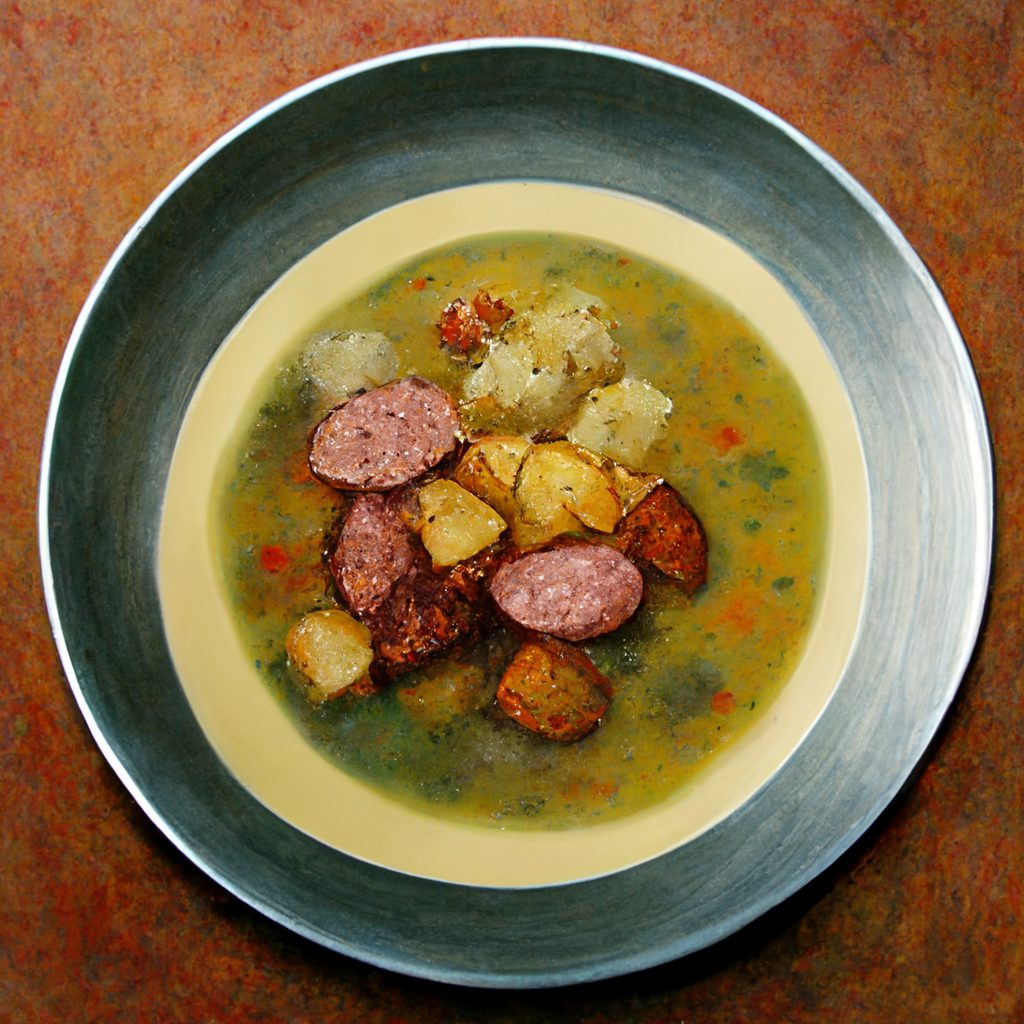
Side dishes were not distributed individually but prepared collectively at the unit level using field kitchens. These kitchens turned the ingredients into stews or soups before distribution.
Frankly, the logistics were mind-boggling. No wonder their supply lines were so well-developed.
Detailed cookbooks were even issued to field cooks, urging creativity to prevent monotony. For instance, if today’s soup was salted broth, tomorrow’s should be meat stew. Sausages, when available, were sometimes boiled separately to add variety rather than tossed into the soup as usual.
Their attention to both flavor and morale was evident.
This explained why Gustav and the others dined on standard rations.
Though they joked and appeared to enjoy themselves, their evaluation of the food was serious. Occasionally, sharp critiques arose—not complaints, but thoughtful observations meant to refine and improve the system for the future.
What do you think about this chapter?